
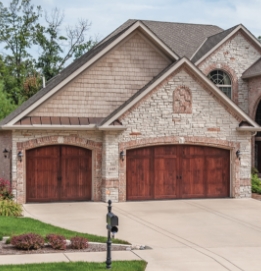
Choosing the right garage door can dramatically transform your home’s exterior, but the debate between wood and steel often leaves homeowners torn between natural beauty and modern practicality. Comparing wood vs steel garage doors is critical when upgrading your home, as your choice will impact your curb appeal, maintenance routine, and budget for decades.
Whether you are drawn to the rich, timeless elegance of natural timber or the durable, low-maintenance appeal of reinforced metal, understanding the fundamental differences is essential.
The Aesthetic Appeal: Natural Beauty vs. Faux Wood Innovation
When it comes to sheer visual impact, natural wood has a distinct advantage. Real wood doors offer a rich, authentic texture that can be custom-stained to perfectly match a home’s exterior elements, such as front porch columns or trim. The customization options are nearly endless, allowing homeowners to select specific wood species, panel designs, and intricate architectural details. For homeowners who want a truly one-of-a-kind look, a wood garage door may be better than a metal one.
However, steel doors have made massive strides in recent years. Faux wood steel doors achieve their appearance through high-quality printed wood-grain patterns or durable composite overlays attached to the steel base. High-end manufacturers now use advanced laser printing to apply non-repeating wood tones directly onto the metal, creating a highly realistic look that avoids the “plastic” feel of older models.
- Real Wood: Unmatched authenticity, deep custom stain options, and luxurious architectural appeal.
- Faux Wood Steel: Realistic composite overlays, no-repeat laser-printed grain patterns, and versatile color choices.
Maintenance: Is a Metal or Wood Garage Door Better?
When it comes to upkeep and longevity, the most significant difference between these two materials lies in the time and effort required to maintain them.
Steel is the most popular garage door material in America due to its combination of durability, affordability, and low maintenance. Steel garage doors are naturally resistant to the warping, rotting, and cracking that frequently affect natural wood. Homeowners generally only need to wash a steel door occasionally to keep it looking new. If you do not enjoy regular upkeep, a metal garage door may be better for you.
Wood doors, on the other hand, demand a strict maintenance schedule. To prevent deterioration, natural wood garage doors typically require refinishing or a new clear coat every one to three years. The frequency of this maintenance depends heavily on the home’s orientation. Wood doors with southern or western exposure face intense sunlight that accelerates the breakdown of protective finishes.
“If a wood door faces the sun all day, you might find yourself sanding and reapplying a clear coat every single year just to protect the finish from breaking down.”
Insulation and Energy Efficiency
Both materials can provide excellent energy efficiency, but they achieve it differently. Wood acts as a natural insulator, offering inherent thermal resistance. However, steel doors rely on synthetic insulation to regulate garage temperatures.
Most modern steel doors are insulated using either polystyrene boards or injected polyurethane foam. Polyurethane foam expands to fill the door panel crevices, offering a higher R-value and better thermal resistance than polystyrene.
| Feature | Wood Garage Doors | Steel Garage Doors |
|---|---|---|
| Insulation Type | Natural wood density | Polystyrene or Polyurethane |
| Weather Resistance | Vulnerable to moisture and sun | Highly resistant to elements |
| Durability | Can rot or warp over time | Resistant to rot, but can dent |
Cost Comparison: Upfront Investment vs. Long-Term Value
Budget is often the deciding factor for homeowners comparing wood and steel. Wood garage doors often cost significantly more than steel doors, sometimes double the price for a standard two-car garage. The cost of real wood is driven by the price of the raw materials, the intensive labor required for custom milling, and the specialized hardware needed to lift heavier wooden panels.
- Basic Steel Doors: The most affordable option, offering basic security and functionality.
- Insulated Faux Wood Steel: A mid-tier investment that balances the aesthetic of wood with the durability of steel.
- Custom Wood Doors: The premium tier, requiring the highest initial investment and ongoing maintenance costs.
While faux wood steel doors with intricate composite overlays can approach the cost of real wood, they offer long-term financial benefits by eliminating the need for expensive annual refinishing.
Conclusion: What Is the Best Material for a Garage Door?
If you are deciding which material is best for your garage door, choosing between wood and steel ultimately comes down to your priorities.
If you are willing to invest the time and money into regular maintenance for the sake of unparalleled, authentic beauty, a real wood door is a stunning addition to any home. However, if you prefer a durable, “set it and forget it” solution that still offers excellent curb appeal, a steel door—especially one with a high-quality faux wood finish—is the superior choice.